DDLab Research : Biological Materials for Next-Gen Healthcare
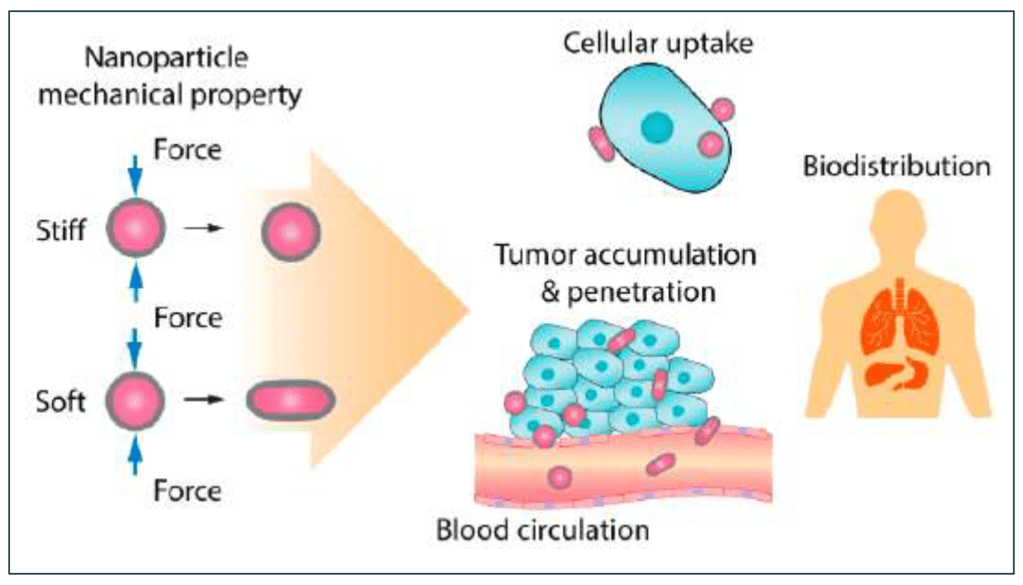
The mechanical properties of nanoparticles—such as elasticity, stiffness, and deformability—are critical yet underexplored factors in cancer drug delivery. These properties govern how nanoparticles behave within the body, directly influencing blood circulation, tumor targeting, tissue penetration, and cellular uptake. By tailoring mechanical responses, nanoparticles can be optimized to overcome biological barriers and improve therapeutic efficiency.
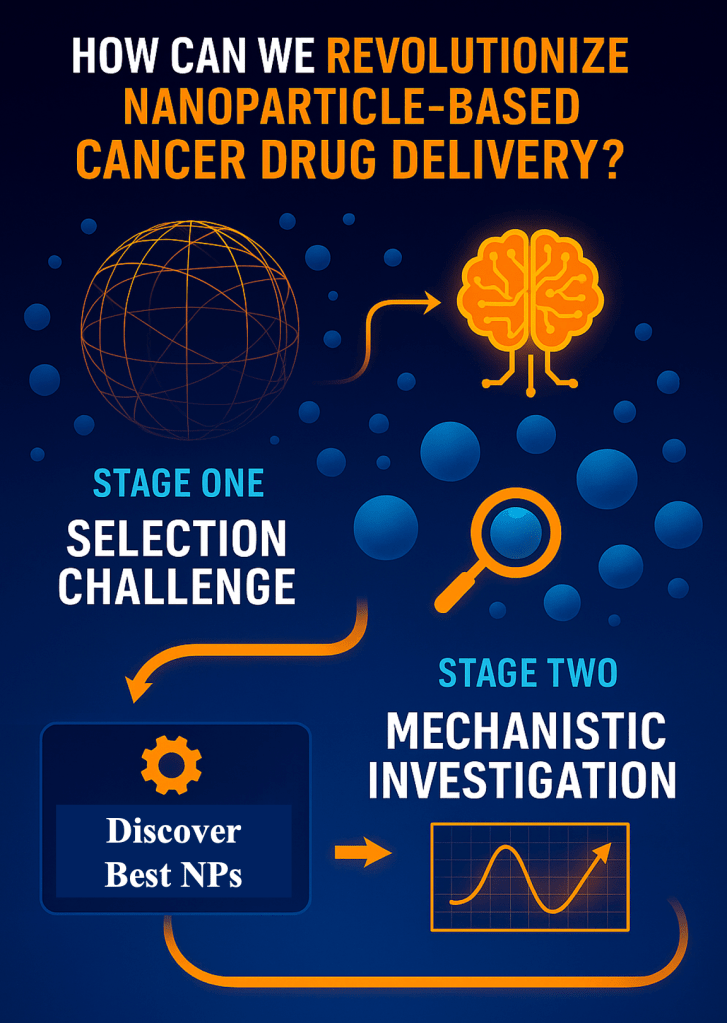
Traditional computational methods cannot feasibly analyze such a vast design space, and experimental approaches face insurmountable limitations in testing every possible nanoparticle (NP) candidate. In this seemingly infinite landscape, the fundamental challenge lies in knowing which materials to study in the first place.
To address this, two critical stages must be tackled:
Stage One: Overcoming the Selection Challenge – Develop an AI-driven strategy to systematically explore and identify the most promising NPs for cancer drug delivery.
Stage Two: Mechanistic Investigation – Once optimal candidates are identified, conduct rigorous computational and theoretical analyses to uncover their mechanical behavior in physiological environments and guide experimental validation.
The insights gained will, in turn, refine the AI-driven selection process, creating a self-improving discovery loop. The overarching question is: How can we achieve this paradigm shift to revolutionize mechanics-informed, NP-based cancer drug delivery?
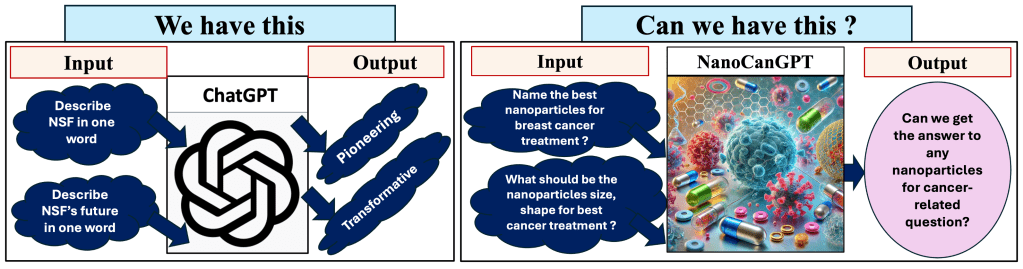
To this end, DDLab is developing NanoCanGPT, a mechanics-informed Generative AI framework, for the accelerated discovery of nanoparticles with tailored mechanical properties for next-generation cancer therapies.
The DDLab Approach –
DDLab is employing a two-stage computational framework that combines generative AI and machine learning to address nanoparticle design for cancer drug delivery. NanoCanGPT will generate, screen, and optimize nanoparticles with tailored mechanical properties, leveraging insights from energy materials and nanoparticle biomechanics.
Figure below illustrates the interconnections among the tasks for the development of NanoCanGPT.

CLICK HERE to go back to RESEARCH page
CLICK HERE to go back to HOME page
