DDLab Research : EnergyGPT – Future of Energy Innovations
In an era defined by the urgent need to combat climate change, the pursuit of sustainable energy has become one of humanity’s greatest challenges. The goal of achieving Net-Zero Emissions by 2050 now stands at the forefront of global efforts. To reach this target, we must advance the field of Sustainable Energy Science—a multidisciplinary domain dedicated to harnessing renewable resources, improving energy efficiency, and reducing the environmental impact of our energy systems. Among the many pathways toward a sustainable future, one critical direction is the development of Generative AI–Driven Energy Science for Next-Generation Energy Storage. Can we have EnergyGPT, similar to ChatGPT, that will answer to any energy-related question?
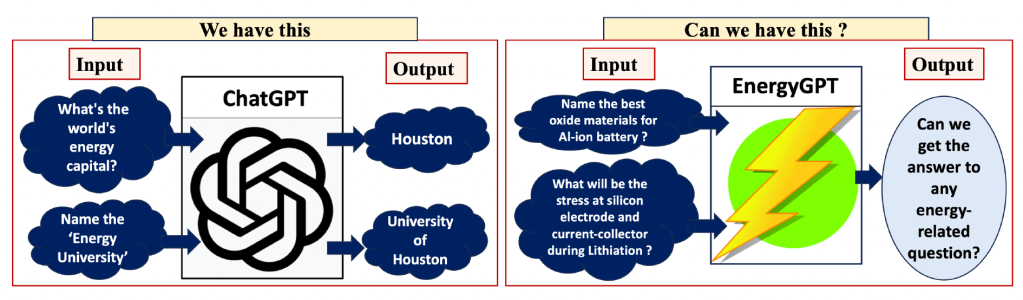
In this direction, DDLab is addressing several urgent challenges critical to building a sustainable energy future and achieving the goal of Net-Zero Emissions by 2050.
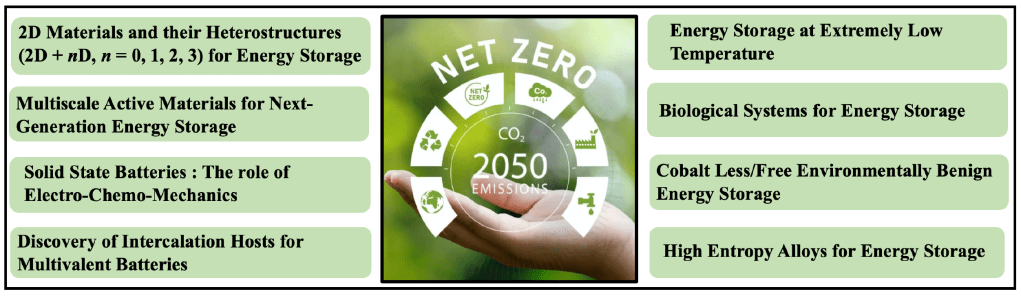
** MULTISCALE ACTIVE MATERIALS FOR ENERGY STORAGE ** — Supported by NSF CAREER AWARD
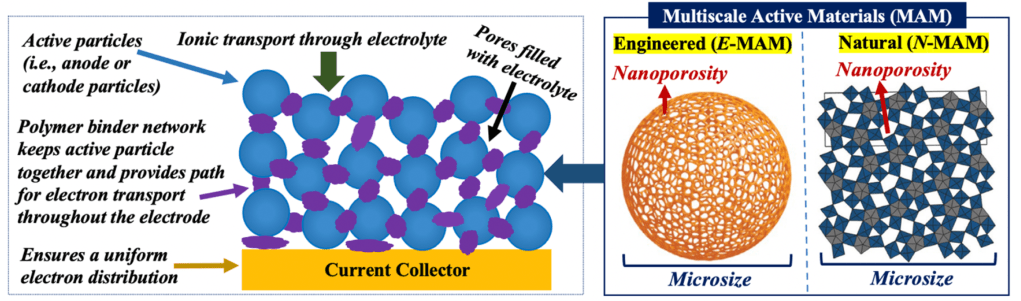
The optimal size of active materials remains a subject of debate. Traditionally, microparticles (≥ 1 μm) have been employed in batteries, while advances in nanotechnology have sparked growing interest in nanoparticles (1–100 nm). Despite extensive research in the nanoscale domain, industry continues to rely primarily on micro-sized materials. This raises an important question: Do nanostructures truly have a role in battery design, given the irreplaceable advantages of microstructures?
The way forward may lie in Multiscale Active Materials (MAM)—microscale structures embedded with nanoscale features. Such materials can be either engineered (e.g., assembling nanoparticles into microparticles) or natural (e.g., micrometer-scale materials with intrinsic nanoscale tunnels). DDLab is working to discover novel MAM and investigate their electro-chemo-mechanical properties to advance next-generation energy storage technologies.
** 2D MATERIALS AND THEIR HETEROSTRUCTURES FOR ENERGY STORAGE **
Two-dimensional materials (2DM) and their heterostructures (2D + nD, n = 0, 1, 2, 3) hold tremendous potential for energy storage applications. 2DM can serve as van der Waals (vdW) interfaces between conventional active materials (e.g., silicon) and current collectors, enhancing interfacial adhesion and mitigating stress-induced fractures. They can also replace traditional polymer binders (e.g., MXenes), highlighting the critical role of interfacial mechanics between 2DM and active materials. Beyond serving as interfacial layers or binders, 2DM can also act as electrodes themselves. For example, porous graphene networks have been shown to deliver nearly five times the capacity of a conventional graphite anode.
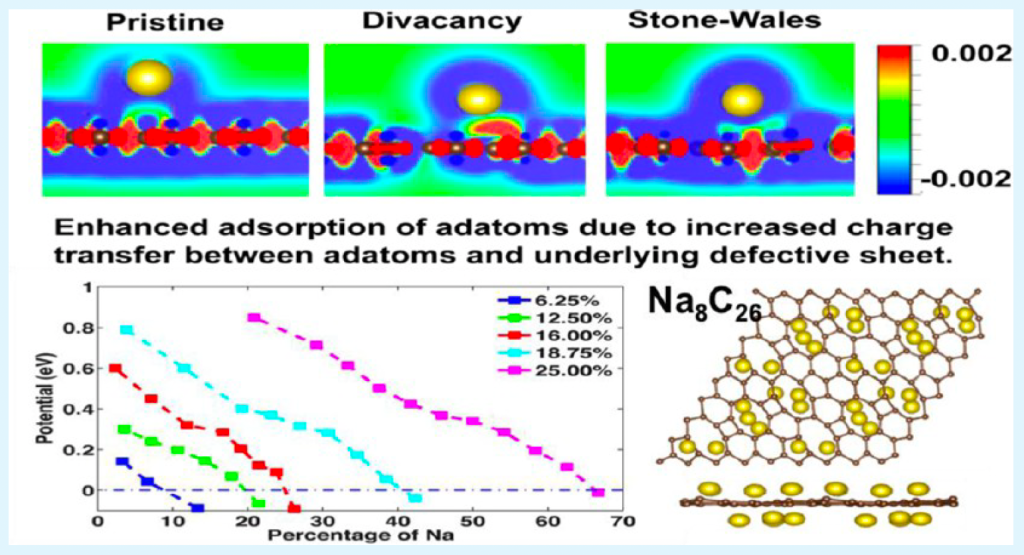
Dibakar Datta was the first in the world to theoretically demonstrate that 2D materials with tailored topology can be beneficial for energy storage. His theoretical prediction was validated by experiments. CLICK HERE.
DDLab is currently working to design novel 2D materials and their heterostructures and investigating their electro-chemo-mechanical properties for next-generation energy storage.
** COBALT LESS/FREE ENVIRONMENTALLY BENIGN ENERGY STORAGE **
Cobalt is an expensive and toxic chemical element that poses serious health risks to those exposed to it. A recent CBS News investigation highlighted the hazardous conditions associated with cobalt mining. Developing batteries with reduced or no cobalt content offers a more environmentally friendly and safer alternative by lowering reliance on this toxic element.
DDLab is working to design cobalt-less/free, environmentally benign energy storage systems for a sustainable future. Our preliminary work is even cited by Nobel Prize winner and also featured in various international media.
** DISCOVERY OF INTERCALATION HOSTS FOR MULTIVALENT ION BATTERIES **
To date, the vast majority of rechargeable batteries rely on lithium-ion (Li-ion) intercalation chemistry. However, the Achilles’ heel of lithium-ion battery (LIB) technology lies in its sustainability and cost. The cost of LIBs is projected to rise to approximately $115 per kWh by 2024. As alternatives to lithium, earth-abundant and lower-cost metals such as aluminum (Al), calcium (Ca), magnesium (Mg), and zinc (Zn) have been actively investigated for battery systems. Yet, the higher ionic charge of these multivalent ions introduces unique material-level challenges. This makes it critical to identify high-performing, stable intercalation host materials tailored for multivalent-ion chemistries.
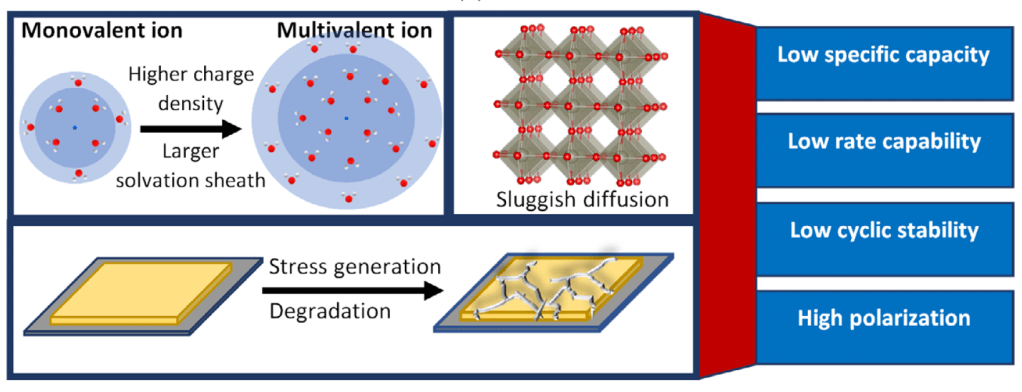
DDLab is working to discover and design new classes of electrode materials specifically optimized for multivalent-ion batteries, paving the way for next-generation energy storage technologies that are high-performance, cost-effective, sustainable, and safe alternatives to incumbent lithium-ion systems.
** ELECTRO-CHEMO-MECHANICS OF SOLID STATE BATTERIES **
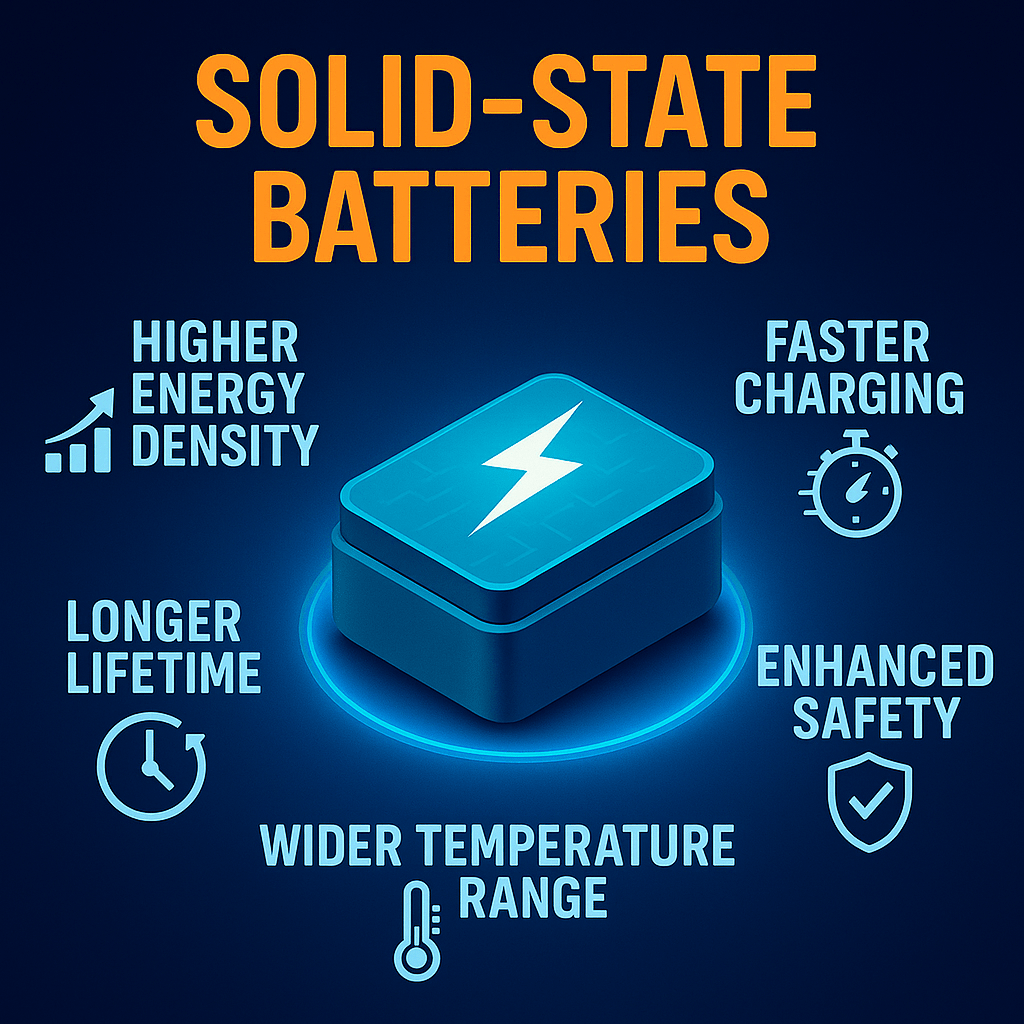
Solid-state batteries (SSBs) offer significant potential advantages over conventional Li-ion batteries commonly used in phones and electric vehicles. These advantages include higher energy density, faster charging, longer lifetime, wider operating temperature ranges, and enhanced safety due to the absence of flammable organic solvents. Realizing the next generation of SSBs, however, will require a paradigm shift in how we approach and engineer solutions to materials challenges—including a fundamental rethinking of how we conceptualize battery operation and its interfaces.

DDLab is investigating critical electro-chemo-mechanical aspects of solid-state batteries (SSBs), including: (1) Stress relief mechanisms in Li metal as well as in ceramics, glasses, and amorphous ceramics. (2) Engineering ductility into ceramic and/or glassy electrolytes. (3) Designing Li metal anodes that either eliminate inhomogeneous plating/stripping of Li or relieve stresses at the Li–electrolyte interface. (4) Engineering cathode active materials that exhibit zero strain during cycling, resist fracture, or possess some degree of ductility. (5) Designing composite cathodes to minimize strain and maximize stress relief. (6) Developing detailed multi-scale models to describe the evolution of stress and strain in SSBs, accounting for length-scale effects, friction, adhesion, and creep.
** BIOLOGICALLY SYSTEMS FOR ENERGY STORAGE **
The use of bio-electrochemical devices, or bio-batteries, based on biological systems represents a promising breakthrough toward a greener and more sustainable future. This can be achieved by:
- Mimicking solutions that already exist in nature,
- Modifying and incorporating biological components derived from natural sources (biomaterials), or
- Utilizing biomolecules capable of converting substrates into products.
DDLab is exploring the vast computational opportunities in this emerging direction.
** ENERGY STORAGE AT EXTREMELY LOW TEMPERATURE **
The degradation of current lithium-ion batteries (LIBs) limits their performance at low temperatures, especially in extreme environments such as the polar regions and outer space. Although secondary or external heating systems are sometimes used to keep batteries operational, these solutions add significant weight, cost, and energy demand. One of the primary factors affecting LIB performance in cold conditions is the electrolyte. High melting/freezing point solvents and inefficient Li⁺ transport contribute to poor performance. In addition, further discovery and optimization of other LIB components are necessary to enable reliable operation in extremely frigid environments.
DDLab is taking on the challenging task of discovering novel electrolytes and electrodes designed specifically for next-generation lithium-ion batteries capable of operating at extremely low temperatures.
** HIGH ENTROPY ALLOYS (HEAs) FOR NEXT-GENERATION ENERGY STORAGE **
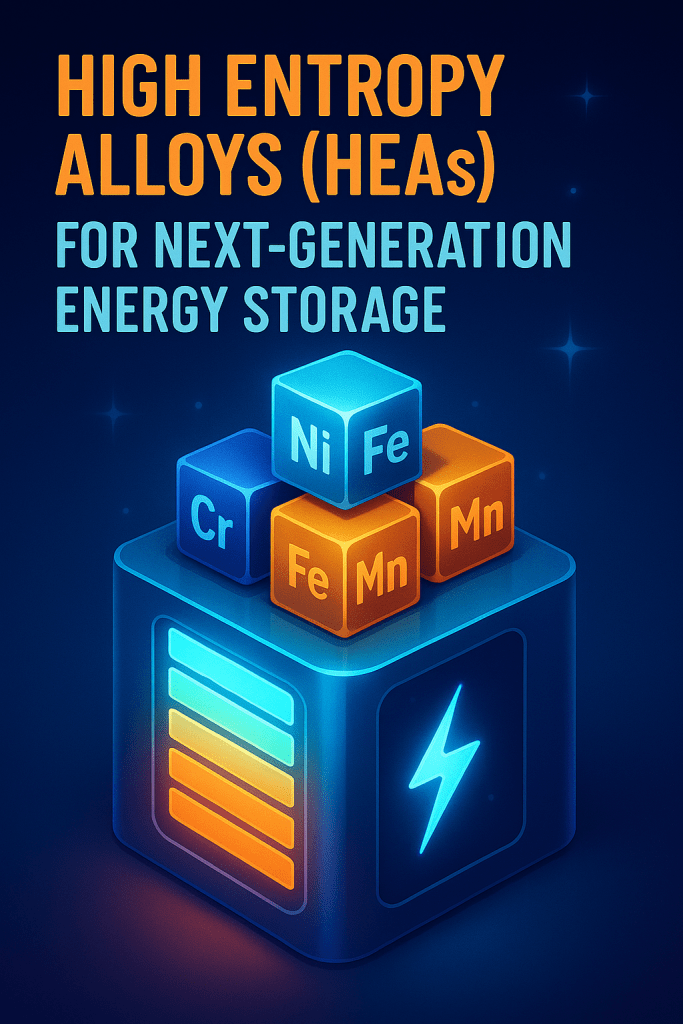
High-entropy alloys (HEAs) are multicomponent solid solutions composed of five or more elements. Their high configurational entropy enhances stability compared to conventional intermetallic compounds. Recent developments suggest that HEAs could have a revolutionary impact on energy storage.
DDLab is exploring this promising new direction, in collaboration with experimental collaborators.
CLICK HERE to go back to RESEARCH page
CLICK HERE to go back to HOME page
